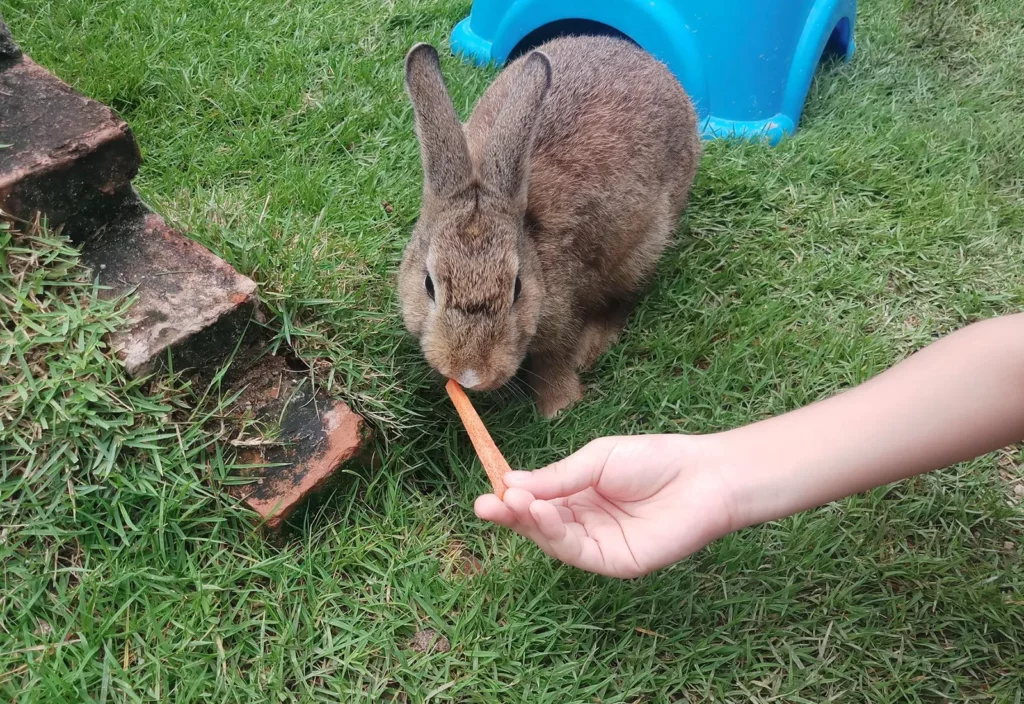

Rabbits are herbivores and need a varied, balanced diet full of nutrients. They require a large amount of fibre and even have a specialised digestive tract to process it.
Staple Diet
In the wild, rabbits eat everything from grass and flowers to fruit and even chew on bark and branches. A mixture of hay and vegetables is a good way to mimic this nutritional diet for your domestic pet. Try to offer a variety of vegetables, scraps and off cuts are fine, leafy greens are a particular favourite. But don’t overdo it on the lettuce, as this can cause diarrhoea.
About 250 grams of vegetables per day for every kilo of bodyweight should keep your rabbit healthy and happy. Rabbits tend to pick out what they like.
Always remember to give your rabbit access to fresh water 24 hours a day, just make sure it is in a container that can’t be tipped over!
Dietary Supplements
With a proper diet, rabbits should not need dietary supplements. However, many health issues can arise from a poor diet so be prepared to discuss your rabbit’s diet when you drop by to see the vet.
“They Keep Eating Their Droppings!”
Don’t worry, this is totally normal. In fact, this behaviour is actually necessary for a rabbit’s health. It is called coprophagy and it allows rabbits to properly process and absorb fibrous nutrients.
Treats for Rabbits
Fruits and even root vegetables make great treats for rabbits. Avoid bread, sweets, chocolate and anything that is high in fat or sugar.
Making a few wooden sticks available for the rabbit to gnaw keeps them entertained and is also great for their teeth.